Studio Apartment Furniture: Smart Solutions for Small Spaces in 2026
Living in a studio apartment means every square foot counts. Unlike a traditional home with separate rooms, a studio forces you to work with one multipurpose space, bedroom, living room, kitchen, and office all rolled into one. This constraint doesn’t have to feel limiting if you choose the right furniture. The key is selecting pieces that work harder for your space, combining functionality with smart design. Whether you’re decorating a studio for the first time or refreshing what you’ve got, focusing on furniture that serves double duty and fits your actual footprint makes all the difference between a cramped box and a livable home.
Key Takeaways
- Multi-functional studio apartment furniture that serves double duty is essential for maximizing limited space and reducing visual clutter, making rooms feel larger and more livable.
- Space-saving bed solutions like loft beds, Murphy beds, or low-profile platform frames with storage can free up floor space for other furniture and activities in studios under 400 square feet.
- Pull-out sofa beds and apartment-scale loveseats (72 inches or less) offer practical seating for daily use and guest accommodations without requiring a separate bed in compact layouts.
- Storage-integrated pieces such as beds with drawers, lift-top ottomans, and wall-mounted shelving capture dead space while functioning as décor, eliminating the need for bulky traditional storage furniture.
- Strategic furniture placement and layering techniques—including area rugs, tall bookcases, and varied lighting—create distinct bedroom, living, and work zones within one open studio floor plan without walls or doors.
- Choosing lightweight, leg-forward furniture pieces on exposed legs rather than skirted bases visually expands the space and makes studio apartments feel airier and more intentional.
Why Multi-Functional Furniture Is Essential for Studio Living
In a studio apartment, you can’t afford dead space or single-purpose pieces. Every item should earn its place by serving at least two functions. A coffee table that also stores blankets, a bed with integrated drawers underneath, or a console that becomes a dining surface when needed, these pieces are the backbone of smart studio furniture.
Multi-functional furniture also creates visual breathing room. Instead of cramming in a separate desk, nightstand, and TV stand, a single well-designed piece can handle multiple jobs and reduce visual clutter. This matters psychologically: fewer objects in your line of sight make the space feel larger, even if you’re working with the same square footage. You’re not sacrificing style either, modern studio furniture for small spaces is designed to look intentional, not like you’re making do.
The practical advantage is storage. Studio apartments typically have minimal closet space, so furniture with hidden compartments, shelves, or drawers becomes your extra room. Look for beds with underframe storage, ottomans with lift-top access, or wall-mounted shelving that doubles as decor. This approach keeps your essentials accessible without eating up floor space.
Maximizing Your Layout With Space-Saving Bed Solutions
Your bed is often the largest piece of furniture in a studio, so its placement and design directly impact how much usable space you have. The standard approach, a bed frame against one wall, works, but there are smarter options if your layout allows.
Loft beds raise your sleeping area 4–5 feet high, freeing up floor space underneath for a desk, seating area, or storage. They work best in studios with 9-foot or higher ceilings: anything lower feels claustrophobic. The trade-off is climbing a ladder and less headroom above. Murphy beds fold up into a wall cabinet, freeing the entire floor when not in use. These require more upfront investment and installation space, but they’re a game-changer if your studio is tiny.
For standard bed frames, choose low-profile designs that visually minimize the footprint. Avoid tall headboards or ornate frames: they draw the eye upward and make the space feel cramped. Instead, opt for a simple platform bed or one with built-in storage drawers. A twin XL or full mattress (not a queen or king) is the practical choice for studios under 400 square feet, it leaves walking space and room for other furniture.
Bed placement matters too. Push it into a corner or against a wall with a window rather than blocking a pathway. If your studio layout allows, use your bed to anchor a sleeping zone visually separate from the living area, which we’ll cover more in the zoning section.
Choosing the Right Sofa and Seating for Compact Apartments
A full-size sectional is rarely the answer in a studio. Instead, focus on settees, apartment-scale loveseats, or small sectional modules designed for tight spaces. Look for pieces that are 72 inches wide or less, anything longer monopolizes the room.
Pull-out sofa beds are the workhorse of studio furniture for small spaces. They seat two during the day and sleep a guest at night without requiring a separate bed. Quality matters here: cheap pull-outs are notoriously uncomfortable and fail quickly. Mid-range brands like Wayfair, Article, or Room & Board offer more durable options than ultra-budget retailers. Test the mattress in person if you can: some are genuinely usable, others are backbreakers.
Accent chairs paired with a small sofa create more flexible seating than one large couch. Choose a lightweight chair you can move easily, maybe with a footrest tucked underneath the sofa. This arrangement lets you reconfigure the space when you need more floor room for yoga, exercise, or guests.
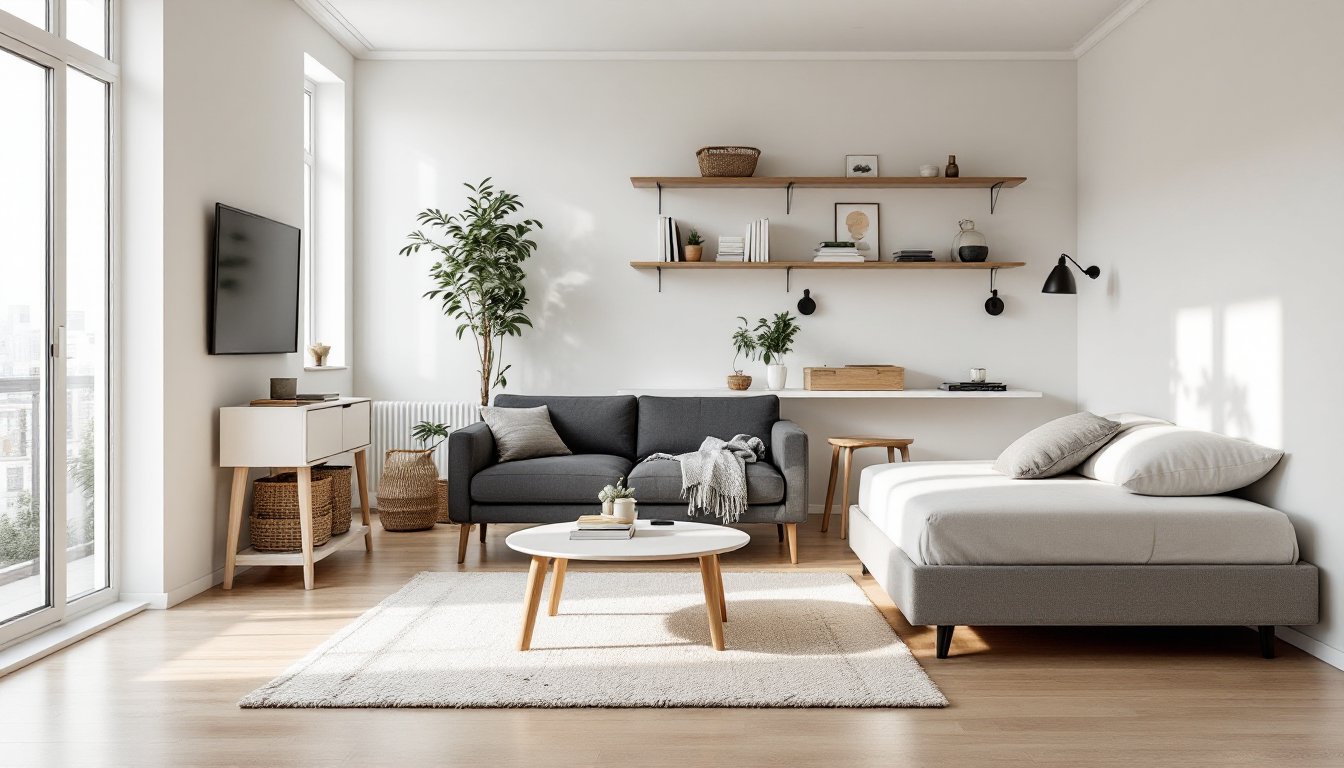
Consider the legs on your seating. Furniture on exposed legs, not skirted to the floor, makes the space feel airier because you can see floor underneath. It’s a simple visual trick that works.
Storage-Integrated Pieces That Double as Décor
Studio apartments demand creative storage solutions beyond a closet. Storage beds with drawers or shelving built into the frame capture otherwise-dead space. Ottomans with lift-top storage serve as a footrest, extra seat, or coffee table while hiding blankets, seasonal clothes, or documents inside. Wall-mounted shelving with integrated baskets provides open storage that’s both functional and decorative when styled thoughtfully.
The trick is choosing pieces that don’t look purely utilitarian. A console table with three drawers, for example, can sit behind your sofa or in an entryway and stores office supplies, mail, or hobby materials without screaming “storage solution.” Nightstands with drawers and open shelving combinations give you the capacity without the bulk of a traditional dresser.
IKEA hacks dominate small-space furniture blogs because the platform’s pieces are affordable and adaptable. IKEA Hackers showcases real examples of DIYers customizing off-the-shelf furniture, adding legs to lower a bookshelf, combining modules to create unique storage walls, or repurposing shelving units as room dividers. You don’t need carpentry skills: often it’s just rearranging, stacking, or adding hardware.
When you add storage, consider vertical space. Wall-mounted cabinets, floating shelves, and tall narrow bookcases don’t fight for floor real estate the way traditional pieces do.
Coffee Tables and Side Tables That Serve Multiple Purposes
A traditional coffee table can dominate a small living area. Instead, opt for nesting tables, two or three tables that stack or tuck together. You get surface space when you need it and minimal footprint when you don’t. Another smart option is a storage ottoman that does double duty as a coffee table, footrest, and hidden stash for throw pillows or blankets.
Expandable or lift-top coffee tables are game-changers. During the day, the top stays flat for drinks and remotes. When you need work or dining space, the top rises and extends, creating a workspace or dinner table without taking up extra floor space. Brands like Article and Wayfair offer several designs in various price points.
Console tables work as sofa-back desks, narrow side tables, or media stands depending on placement. Look for one with shelving underneath for books or decorative baskets. At 10–14 inches deep and 3–4 feet wide, they claim minimal floor space while providing real utility.
Skip bulky side tables with multiple shelves. Instead, choose slim tables or small round tops on single legs. The lighter the silhouette, the larger your studio feels. Pairing a slim C-table (which slides under a sofa) with a wall-mounted shelf behind gives you surface and storage without cramping the floor plan.
Creating Distinct Zones Without Overwhelming Your Space
One of the biggest challenges in studio living is defining separate areas, a bedroom zone, living zone, and work zone, in one open floor plan. You can do this with furniture placement and visual tricks rather than walls or closed doors.
Furniture arrangement is the simplest tool. Position your bed in one corner and angle the sofa to face a different direction. A low bookshelf or console can act as a visual divider between sleeping and living areas without blocking light or making the space feel closed off. Apartment Therapy regularly features small-apartment tours showing how strategic furniture placement creates distinct zones that feel intentional, not accidental.
Area rugs define zones without physical barriers. A rug under the bed grounds the sleeping area: another under your sofa anchors the living space. This visual separation helps your brain compartmentalize the studio’s functions.
Vertical elements also help. Tall bookcases or shelving units create a subtle boundary while remaining open (you can still see through them or around them). Wall-mounted shelving above your desk area makes that corner feel separate from the sleeping zone.
Color and lighting contribute too. A desk lamp on a specific table signals “work zone.” Softer ambient lighting near the bed creates a bedroom feel. These layers of separation, furniture, rugs, lighting, and subtle color shifts, make a small studio feel like it has rooms, even though it’s technically one box. That psychological separation improves comfort and functionality more than you’d expect. Dwell showcases modern apartment layouts where designers use these layering techniques to transform 400-square-foot studios into livable, distinct spaces.
Conclusion
Studio apartment living isn’t about compromise, it’s about choosing furniture intentionally. Multi-functional pieces, smart vertical storage, and thoughtful arrangement transform tight quarters into functional homes. Start with your essentials: a quality bed, seating that pulls double duty, and storage that hides as decor. Then layer in accent pieces that work for your layout. The result is a space that feels open, organized, and genuinely livable rather than like a temporary holding pattern.