Acacia Wood Patio Furniture: A Complete Buying Guide for 2026
Acacia wood has become a go-to material for outdoor furniture, and for good reason. Homeowners who want durable, weather-resistant seating and tables that don’t require the premium price tag of teak are finding acacia delivers solid performance year after year. Whether you’re furnishing a small balcony or a sprawling deck, acacia wood patio furniture strikes a practical balance between longevity, aesthetics, and value. This guide walks you through what acacia is, why it works outdoors, how to care for it, and how to pick pieces that fit your space and style.
Key Takeaways
- Acacia wood patio furniture delivers 80–90% of teak’s weather resistance and durability at a fraction of the cost, making it an excellent value for outdoor spaces.
- With a Janka hardness rating of 1,600–1,950, acacia wood resists denting and scratching better than many alternatives and can last 15–20 years with proper care.
- Regular cleaning at least twice per season and applying a water-repellent sealant every 1–2 years keeps acacia furniture looking fresh and extends its lifespan significantly.
- Acacia patio furniture works across multiple design styles, from minimalist modern to rustic farmhouse, with warm honey-brown tones that complement both contemporary and traditional outdoor spaces.
- Inspect joinery and construction details like mortise-and-tenon joints and solid wood connections rather than relying solely on screws or nails when selecting quality pieces.
- Most acacia is sustainably sourced from dedicated plantations rather than old-growth forests, making it an environmentally responsible outdoor furniture choice.
What Is Acacia Wood and Why It’s Ideal for Outdoor Furniture
Acacia is a tropical hardwood harvested primarily from sustainably managed farms in Southeast Asia and South America. It’s dense, strong, and naturally resistant to moisture and rot, qualities that make it far superior to softwoods like pine or cedar for outdoor use. The wood contains natural oils that act as a built-in defense against weather, insects, and fungi.
What sets acacia apart is its Janka hardness rating of around 1,600–1,950, meaning it resists denting and scratching better than many alternatives. Unlike teak, which costs two to three times more, acacia delivers comparable weather resistance at a fraction of the price. It won’t warp or splinter as easily as pressure-treated lumber, and it develops a beautiful silvery-gray patina over time if left untreated, or you can seal it to maintain its warm honey color.
The wood works well for chairs, benches, tables, and loungers. Its grain is straight and relatively uniform, making it easy for manufacturers to produce clean lines and smooth finishes. You’ll find acacia furniture in a range of styles, from minimalist modern to rustic farmhouse.
Advantages of Acacia Wood for Your Patio
Durability in harsh conditions. Acacia withstands UV rays, rain, snow, and temperature swings without rotting or splitting the way softer woods do. A well-maintained acacia chair can last 15–20 years outdoors, even in challenging climates.
Lower cost than premium alternatives. Teak is the industry standard for outdoor hardwood, but it costs significantly more. Acacia gives you 80–90% of teak’s performance without the premium markup, making it accessible for larger patio sets or multiple pieces.
Minimal prep and finishing requirements. Unlike softwood that needs regular staining or sealing to survive a season or two, acacia can be left natural with minimal intervention. If you do seal it, one coat every couple of years keeps it looking fresh.
Aesthetically versatile. Acacia’s warm, honey-brown tones complement both contemporary and traditional outdoor spaces. The grain patterns are attractive without being overly busy, and it stains or finishes evenly.
Sustainability. Most acacia is grown on dedicated plantations rather than harvested from old-growth forests. Look for furniture from certified sources if environmental impact matters to you.
These advantages make acacia a practical choice for homeowners who want furniture that performs without becoming a second job to maintain.
Essential Maintenance and Care Tips
Regular Cleaning and Protection
Acacia’s natural oils provide some protection, but regular care extends its life significantly. Start by cleaning your furniture at least twice a season, or monthly if it’s in a shaded, damp spot where moss or mildew might take hold.
For routine cleaning: Use a soft brush or cloth with warm water and a mild dish soap solution. Scrub gently with the grain, then rinse thoroughly and allow to dry completely. Avoid high-pressure washers, which can damage the wood fibers and open the grain to moisture.
For stubborn stains: A dilute solution of white vinegar and water works for mold or mildew. For grease or tar, use a wood-specific cleaner and follow the product instructions. Always test on a hidden spot first.
Sealing and oiling: If you prefer to maintain acacia’s golden color rather than let it weather to gray, apply a water-repellent wood sealant or outdoor furniture oil every 1–2 years. Use a product rated for exterior hardwoods, teak oil or acacia-specific formulations work well. Apply thin coats with the grain, and allow proper drying time between coats.
Seasonal storage: In harsh winters, consider covering furniture or moving it to a sheltered location. Snow and ice load can stress joints and wood fibers. At minimum, brush off snow promptly to prevent excess moisture absorption.
Avoid prolonged water pooling. If furniture sits directly on wet soil or grass, prop it slightly or place coasters under legs to allow air circulation. Moisture trapped beneath the furniture is the primary cause of rot, even in durable woods.
These habits keep acacia looking and performing at its best with minimal effort.
Choosing the Right Acacia Furniture for Your Space
Style and Design Considerations
Before buying, measure your patio or deck carefully. Account for walkway space, traffic flow, and any fixed elements like grills or planters. A dining table that seats six might overwhelm a small space, leaving no room to move chairs.
Consider the finish. Acacia comes in several styles: natural unfinished (develops patina, requires occasional oiling), pre-sealed (maintains color longer), and stained or painted (for a custom look). Unfinished pieces are typically the most affordable: sealed or finished ones cost more but reduce your maintenance commitment.
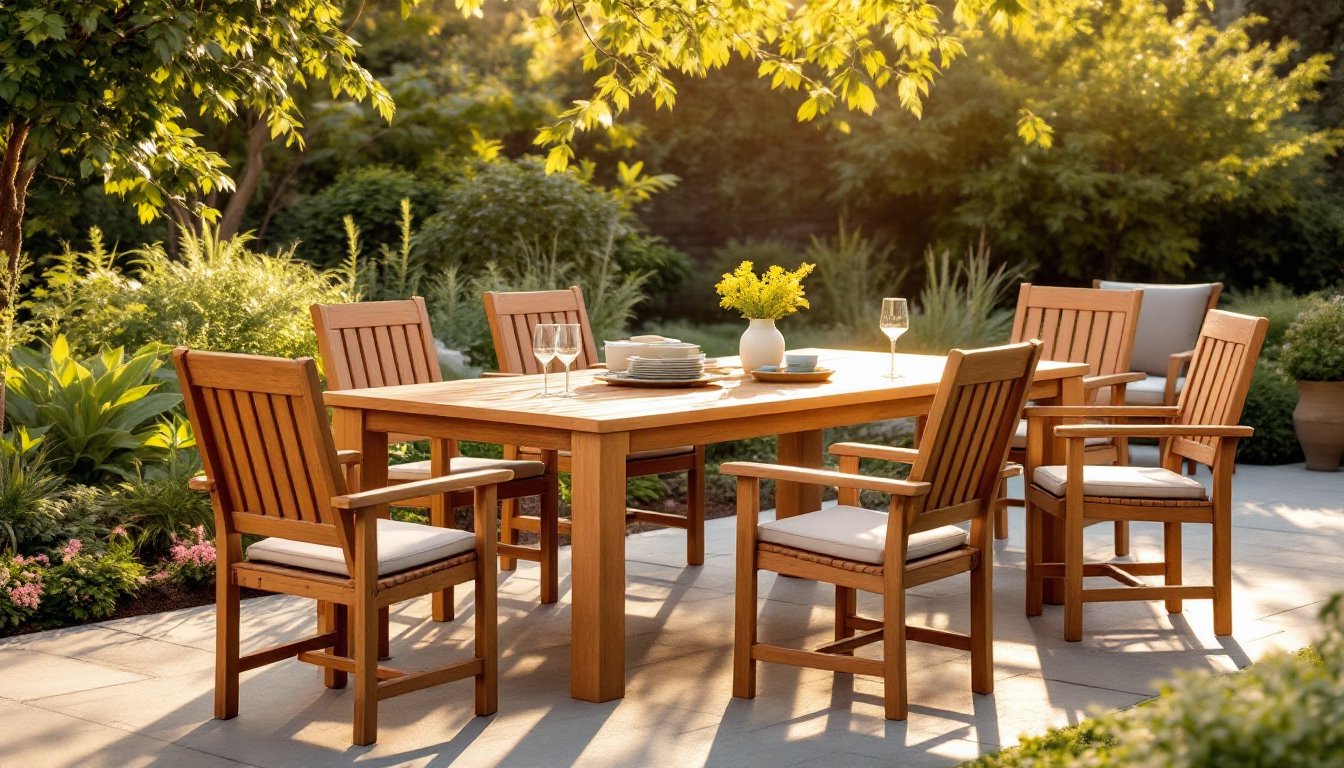
Match your aesthetic. Rustic and farmhouse designs pair naturally with acacia’s warm tones. Modern spaces benefit from clean-lined acacia tables or chairs with minimal ornamentation. Coastal or transitional styles also work well. Features like solid acacia wood rectangular dining tables showcase the wood’s grain and durability while accommodating multiple settings.
Think about scale and proportion. An oversized sectional or sprawling table can overwhelm a small patio. Conversely, spindly bistro chairs might look lost on a large deck. Stand back and visualize the final layout.
Comfort for extended use. If you’ll spend long hours sitting, test chairs for back support and seat depth. Acacia loungers should have cushions to prevent direct wood contact with skin. Outdoor fabrics designed for durability (like solution-dyed polyester or Sunbrella) won’t fade or mildew as quickly as cotton.
Inspect joinery and construction. Look for mortise-and-tenon joints or dowel connections rather than just screws or nails alone. Quality acacia furniture uses properly dried wood and solid construction techniques. Check that chair arms and legs feel sturdy, no wobbling.
Design inspirations from rustic and country outdoor living or Southern outdoor design can guide your choices if you’re unsure where to start. Take time to pick pieces you’ll actually use and enjoy.
Conclusion
Acacia wood patio furniture offers homeowners a smart balance of durability, aesthetics, and affordability. It performs reliably in outdoor conditions, resists the wear that claims softer woods, and requires only basic seasonal care. By choosing well-constructed pieces that fit your space, cleaning regularly, and applying a sealant when needed, you’ll get years of use from your investment. Start with one or two key pieces, a dining table or lounge chair, and expand from there as your outdoor living space takes shape.