Creating A Calm Autism-Friendly Bedroom: Furniture Picks And Design Tips For 2026
Designing a bedroom for someone with autism requires thinking beyond aesthetics. Sensory sensitivities, to light, sound, texture, and spatial crowding, shape how a space feels. The right furniture and layout can transform a bedroom into a genuine retreat rather than a source of stress. This guide covers practical, evidence-based choices in bedding, storage, and layout that respect sensory needs while keeping the space functional and calm. Whether you’re renovating from scratch or tweaking what’s already there, these steps help you build a bedroom that works with, not against, autism-related sensory processing differences.
Key Takeaways
- Autism bedroom furniture should prioritize sensory comfort by minimizing visual clutter, controlling lighting, and using soft, natural materials to create a calming retreat.
- Choose simple, solid bed frames and firm mattresses (medium to high density) that provide proprioceptive stability and avoid off-gassing, paired with natural fiber sheets like cotton or linen.
- Enclosed storage solutions—drawers, labeled bins, and closet organizers—reduce sensory and cognitive load far more effectively than open shelving or decorative displays.
- Replace overhead lighting with dimmable, warm-white LED bulbs (2700K), blackout shades, and sound-masking tools like white noise machines to control unpredictable sensory stimuli.
- Implement changes gradually, involve the user in decisions, and test furniture in person, since sensory preferences are highly individual and can shift over time.
Understanding Sensory Needs In Bedroom Design
Autism affects how the nervous system processes sensory input. Many autistic people experience heightened sensitivity to certain stimuli, strong odors from paint or new fabric, fluorescent or flickering light, background noise, or tactile sensations like tight clothing or rough materials. Others seek out sensory input and need proprioceptive feedback (deep pressure, weight, resistance). A bedroom designed around these differences becomes a restorative space.
Start by observing what triggers discomfort or distraction. Does overhead lighting cause fatigue? Is the person sensitive to fabric textures or seams? Does clutter create mental overwhelm? These observations guide furniture selection and room layout. A calming bedroom typically features soft, dimmable lighting: minimal visual clutter: natural or muted colors: and materials that feel comfortable to touch.
Reducing unpredictable sensory input is as important as removing overwhelming stimuli. Consistent textures, predictable layouts, and organized spaces allow the nervous system to relax. This is where thoughtful furniture placement and storage solutions matter most.
Essential Furniture Pieces For Autism-Friendly Bedrooms
The core furniture, a bed, mattress, storage, and optional sensory additions, form the foundation. Quality matters here, but so does fit to the person’s specific sensory profile. Let’s break down the key pieces.
Low-Stimulation Bed Frames And Mattresses
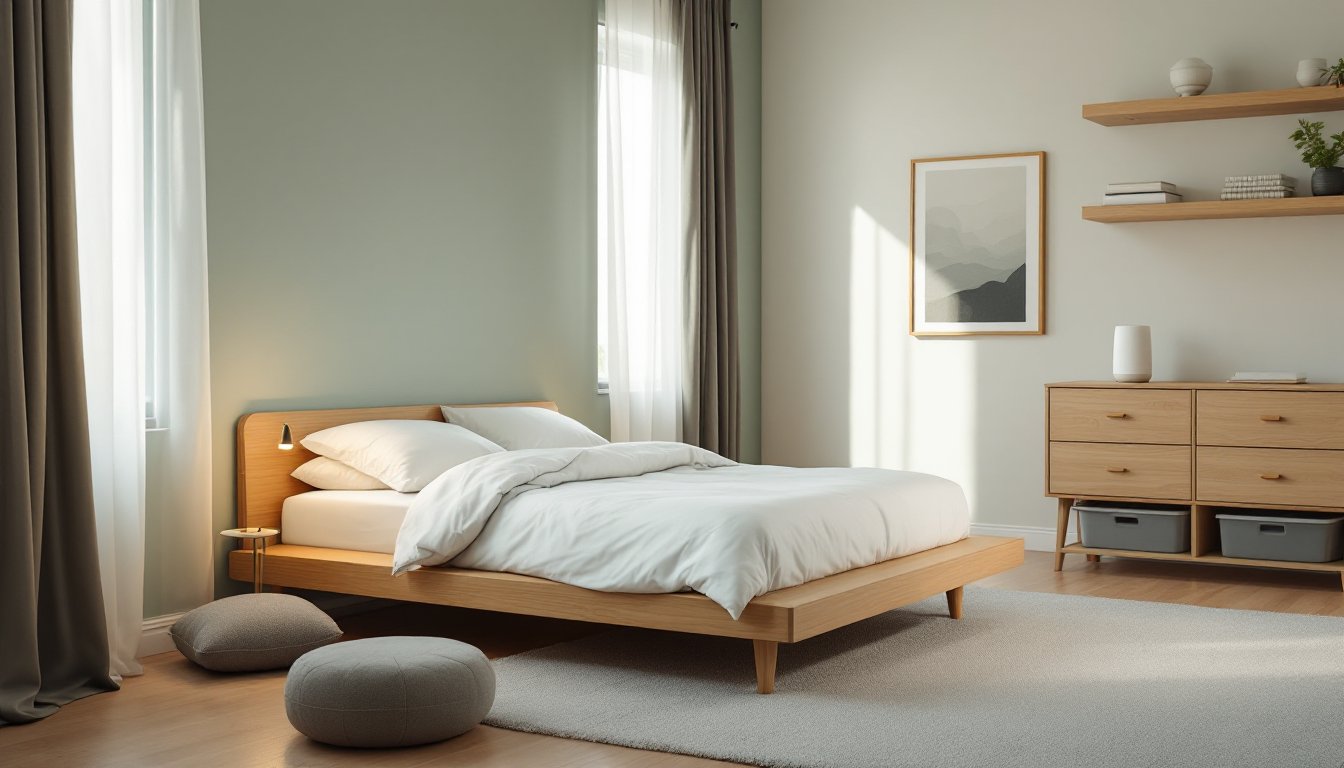
Bed frames should be simple, solid, and visually quiet. Metal frames with lots of bars or ornate headboards create visual clutter and can rattle. A wood bed frame (solid or slatted) or a platform bed is more sensory-friendly. Platform beds with solid foundations offer better support and won’t shift unexpectedly during the night, important for people who need proprioceptive stability.
The mattress itself is critical. Many autistic people prefer firm mattresses (medium to high density) because they provide better body support and proprioceptive feedback. Memory foam can feel suffocating to some, while others find it grounding. Latex or hybrid mattresses split the difference, responsive but supportive. Avoid mattresses with strong off-gassing (new foam smell): air out the mattress outdoors for 24–48 hours before use, or buy certified low-VOC options.
Sheeting matters too. Natural fibers like cotton or linen are gentler on sensitive skin than microfiber or polyester blends. Look for high thread counts (300+) for softness without synthetic feel. Weighted blankets (5–7% body weight) provide calming deep pressure for many autistic people, but they’re not universal, test before committing.
Storage Solutions That Reduce Visual Clutter
Clutter is a sensory and cognitive load. Open shelving, piles of items, and mixed textures create visual noise. Enclosed storage, dressers with drawers, closet organizers, and bins with lids, keeps visual stimuli contained.
Bins and labeled containers are your best friend. Clear containers let users see contents without opening every one: opaque containers hide items entirely (less visual stimulation). Label bins with pictures or words depending on reading ability. Drawer dividers inside dressers prevent clothes from becoming a jumbled, overstimulating pile.
Don’t rely on creativity or decorative display. Functional, closed storage wins every time. If wall décor is used, keep it minimal, one or two pieces rather than a gallery wall. Wall color should be soft and neutral: pale gray, warm white, or subtle sage rather than bright blue or accent walls that demand attention.
Creating Safe, Comfortable Sensory Spaces
Beyond the essentials, a few targeted additions help the bedroom function as a genuine sensory retreat. Lighting deserves its own attention. Standard overhead lights should be replaced or supplemented with dimmable LED bulbs (warm white, 2700K color temperature) and a dimmer switch. Motion-activated or scheduled lights reduce the need to fumble for switches at night. Smart bulbs let users preset brightness and color without getting out of bed.
Windowless rooms are ideal, but if that’s not possible, use blackout shades or thermal curtains to block light and reduce external noise. They also provide gentle sensory boundaries and a sense of enclosure that many autistic people find calming.
Sound matters. A white noise machine or fan masks unpredictable household sounds. Avoid harsh, rhythmic noises (like digital alarms): use gradual wake sounds instead. If the person uses noise-canceling headphones or earplugs, keep them on a nightstand or hook within reach.
For those who seek proprioceptive input, consider a floor cushion, bean bag, or nest chair, a low-stimulation seating area within the bedroom for decompression. Position it away from the bed so it doesn’t compete visually. Avoid plastic bean bags (loud, sweaty) in favor of microsuede or linen covers that are gentler to the touch. Free sensory room designs, including simple furniture builds, can be found through IKEA hacks and sensory-room layouts that adapt ready-made pieces to autism-friendly specs.
Practical Implementation And Next Steps
Start with essentials: a calm bed setup, closed storage, and adjusted lighting. Don’t overhaul everything at once. Sensory preferences can shift, and bringing in furniture gradually lets the person adjust. If budget is tight, prioritize the mattress and storage: these have the biggest immediate impact.
Measure the room and sketch a simple floor plan before buying. Autism-friendly bedrooms benefit from open floor space (reduces cramped feeling) and a clear pathways to the bed and door. Avoid blocking the exit or creating bottlenecks.
Test furniture in-person if possible. Sit on chairs, feel fabric samples, and experience the bed. Sensory needs are personal, what’s calming for one person may be overstimulating for another. Involve the bedroom’s user in decisions whenever possible.
Building custom sensory furniture? Plans for DIY sensory room furniture simplify construction. Alternatively, many mainstream brands now offer sensory-friendly pieces, look for neutral palettes, solid construction, and natural materials. Check product descriptions for terms like “low-VOC,” “organic fabric,” or “sensory-safe.”
Carry out changes over a few weeks, observing how the room feels. Ask open-ended questions: Does the lighting help you relax? Are you finding things easily? Do any textures feel uncomfortable? Adjust accordingly. Real autism-friendly bedroom ideas balance form and function, prioritizing the person’s comfort above design trends.
Conclusion
An autism-friendly bedroom isn’t about elaborate design, it’s about removing obstacles to calm and comfort. Simple, solid furniture: soft lighting: minimal clutter: and intentional sensory choices create a space where the nervous system can genuinely rest. The best bedroom is one that works for the person who sleeps there, so stay flexible, observe what lands, and adjust. Small changes often yield big shifts in sleep quality and daytime mood.