How To Keep Patio Furniture From Blowing Away: 6 Effective Solutions For Every Season
Spring winds can send an unsecured patio chair tumbling across the yard, and it only takes one incident to realize that keeping patio furniture from blowing away is more than a convenience, it’s essential for safety and longevity. Loose cushions, toppled tables, and dented chairs aren’t just eyesores: they’re hazards and investment losses. Whether dealing with occasional gusts or living in a consistently breezy climate, homeowners have multiple practical options to anchor their outdoor spaces. This guide covers six proven strategies, from heavy-duty weights to strategic placement, so patio furniture stays put year-round.
Key Takeaways
- Keeping patio furniture from blowing away requires a layered approach combining weights (20-60 lbs per leg), straps, strategic placement, and storage of lightweight pieces during sustained winds above 30 mph.
- Heavy-duty furniture weights, metal clamp systems, and weighted base stands vary in cost ($15-$150) and suitability depending on your climate—test them in actual wind conditions and inspect attachment points regularly.
- Position furniture strategically against wind by clustering pieces together, placing them near your house or hardscape features, and avoiding exposed open-air locations to reduce wind load before adding anchoring systems.
- Zippered furniture covers and ratchet-buckle straps offer dual protection by shielding from UV damage while adding drag and stability; apply straps in crisscross patterns for even force distribution.
- Heavier materials like teak, hardwood, and cast iron naturally resist tipping, but lightweight aluminum and resin furniture require pairing with weights and covers to stay secure year-round.
- Store lightweight cushions, small tables, and decorative accents indoors during high-wind forecasts, and remove furniture legs if possible to significantly reduce wind profile and prevent stress on joints and welds.
Use Heavy-Duty Weights and Anchoring Systems
The most straightforward defense against wind is sheer weight. Furniture weights, also called base weights or gravity anchors, clamp directly onto table and chair legs, adding 20 to 60 pounds per piece depending on the system.
Select Furniture Weights That Match Your Climate
Concrete furniture weights are the budget option, typically costing $15–$40 per weight. They’re heavy and durable but require space to store. Metal clamp systems ($25–$75 per set) grip the furniture leg and are easier to transport: look for models with rubber padding to avoid marring finishes. Weighted base stands ($40–$150 each) work well for umbrellas and free-standing pieces, they’re stable and don’t rely on clamping.
Choose your weight based on wind exposure. In mild climates with occasional gusts, 20–30 pounds per leg may suffice. High-wind zones or locations near open water demand 50+ pounds per leg. Test weights in actual conditions: if furniture still shifts, add more mass.
A critical step many skip: inspect the attachment points regularly. Clamps can loosen, and concrete weights develop hairline cracks that grow in freeze-thaw cycles. Replace or reinforce weakened systems before the season turns severe.
Also note that weighted patio furniture options offer both aesthetic and functional benefits compared to adding weights to standard pieces.
Invest in Weather-Resistant Covers and Straps
Straps and covers work as a backup layer of protection. Heavy-duty nylon straps with ratchet buckles weave through furniture legs and anchor points, typically rated for winds up to 50–60 mph. Pair them with securable eye bolts mounted into the patio deck (check local codes before drilling).
When using straps, position them low, near the base, to maximize leverage against tipping. A single strap down the center of a table or chair will rotate the piece: crisscross patterns distribute force better. Test the tension: the furniture should barely move when you push it by hand, but straps shouldn’t be so tight they crack cushions or warp frames.
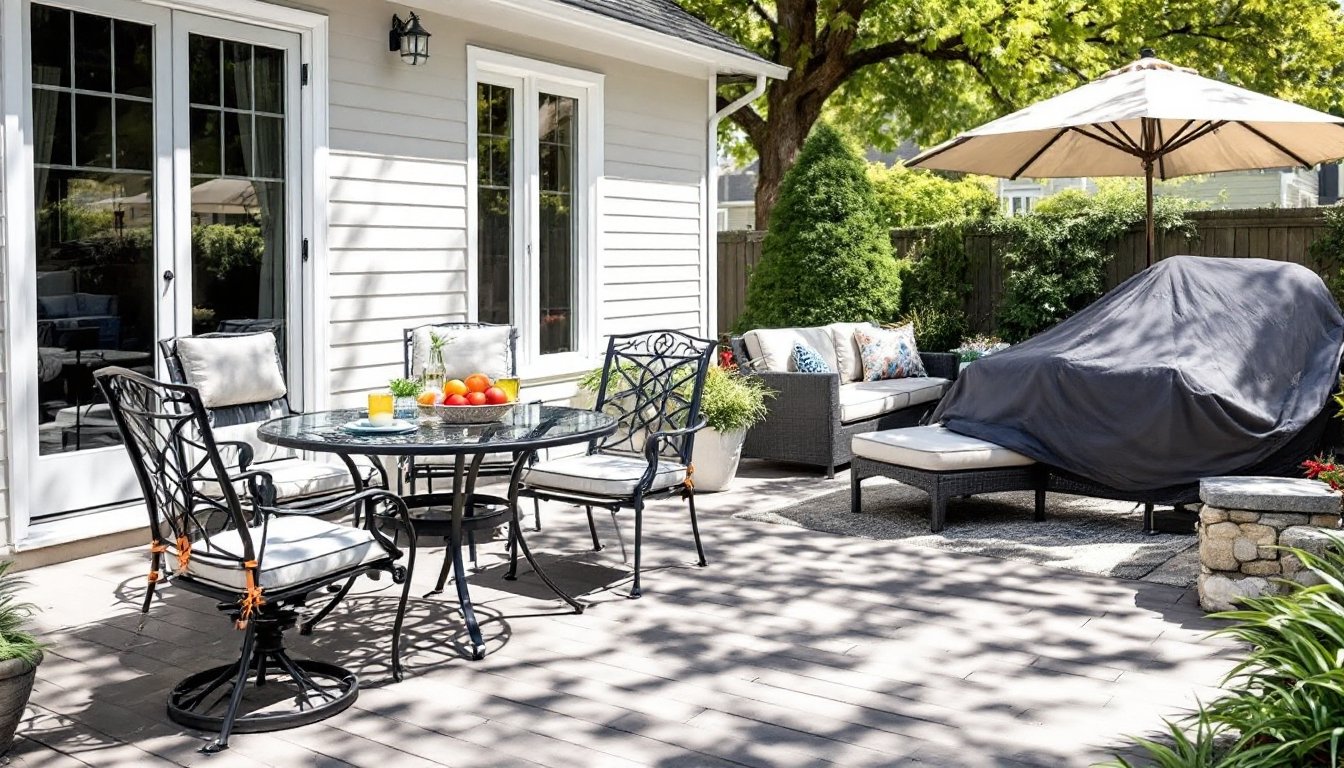
Zippered furniture covers do double duty: they shield cushions and frames from UV and rain while adding drag that resists wind. The added surface area means wind has more to grip, which seems counterintuitive but actually stabilizes lighter pieces by increasing friction. Premium covers include reinforced grommets and tie-down loops.
Budget roughly $20–$50 per chair cover and $30–$100 for table covers. Secure them with bungee cords rather than relying on zippers alone. A cover that flaps loose becomes a sail itself.
Store Lightweight Pieces During High Winds
Sometimes the best solution is absence. Lightweight cushions, small side tables, and decorative accents should move indoors or into a garage when sustained winds exceed 30 mph, the threshold where many unsecured items become projectiles.
When to store: check the forecast weekly during spring and fall. If winds are predicted to gust above 30 mph for more than a few hours, take action that morning. Don’t wait until evening when schedules are tight.
Storage tips: stack cushions in gallon-size plastic bins to keep them dry and compressed. Lean chair backs against a wall rather than nesting them: nested chairs absorb moisture and become harder to separate. Use weatherproof storage containers if basement or garage space is tight.
For lightweight aluminum or plastic furniture, remove legs if possible, this reduces wind profile significantly. Most modern patio sets have quick-release pins that take 30 seconds to disengage. Store the legs in a bin and the top pieces flat or vertical.
This isn’t laziness: it’s smart maintenance. Constant flexing in the wind stresses joints and welds, shortening a chair’s life by years. A single season of being blown around can loosen welds enough to create safety issues the following year.
Position Furniture Strategically Against Wind
Placement cuts wind load before weights or covers ever matter. Wind direction varies by season and time of day, but prevailing patterns in your area are predictable, check your local historical weather data or ask neighbors about typical wind flow.
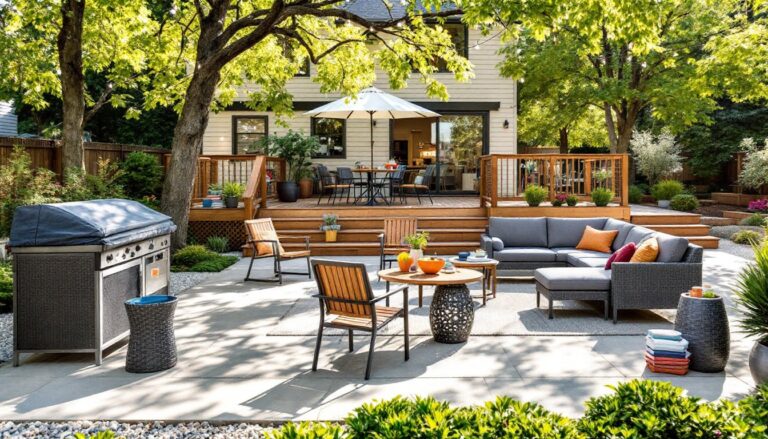
Arrange furniture to break wind naturally. A larger table anchors the center while lower-profile chairs nestle against it or a planter. Group seating areas rather than spreading pieces out: clustered furniture is harder to topple individually. A sturdy outdoor sectional acts as both seating and a windbreak for lighter chairs positioned behind it.
Use hardscape features: patios against south-facing house walls gain wind protection from the building’s mass. Positioning furniture 2–3 feet away from the wall creates a sheltered pocket without blocking sight lines. Stone planters, raised garden beds, or outdoor kitchen islands provide similar buffering.
Avoid open-air positions. A lone dining table in the center of a deck with clear sightlines to the edge is a target. Move it closer to the house or against a fence line. Even 4–5 feet of relocation can place it in a low-wind zone.
Trees provide natural windbreaks, though they create their own challenges (shade, leaf drop, root damage to hardscaping). Large shade cloth panels or pergolas with mounted lattice offer the buffering benefit without trees’ downsides, though installation takes more effort.
Choose Heavier, Wind-Resistant Furniture Materials
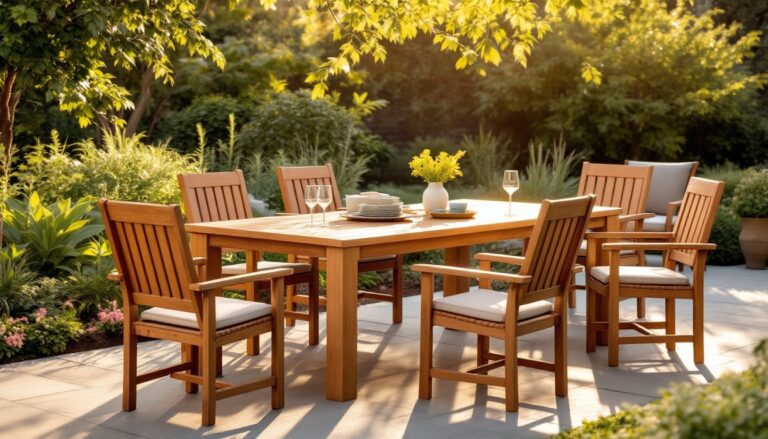
If building a patio from scratch or replacing worn pieces, material choice matters as much as anchoring method. Teak and hardwood furniture is inherently heavy (100+ pounds for a single dining chair) and wind-resistant by mass alone. Cast iron frames with natural stone or thick glass tops weigh even more and resist tipping. A wrought-iron settee won’t budge in typical winds without additional anchoring.
The trade: solid wood and cast furniture cost significantly more ($1,500–$4,000+ for a four-piece set) and requires regular maintenance (sealing, oiling, rust protection). It’s a multi-year investment, but durability across decades makes the cost-per-year reasonable.
Aluminum and resin furniture is lighter (20–50 pounds per piece) and lower maintenance but demands anchoring support. If budget or lifestyle calls for these materials, plan to bundle them with weights and covers. Hybrid designs, aluminum frames with composite or stone tops, offer a middle ground.
Cushioned seating amplifies wind effect. A chair with thick cushions acts like a sail: pairing it with a frame alone (without cushions) reduces wind profile significantly. Store cushions indoors during off-season anyway to extend their life.
Check material specifications before buying. Manufacturers often list nominal weights without cushions: ask for confirmed assembled weight if wind is a concern. Heavier isn’t always stronger, a flimsy heavy chair made from dense but brittle plastic will break if tipped: solid hardwood or metal flex without failure.
Conclusion
Keeping patio furniture from blowing away rarely requires a single fix, most successful setups layer multiple defenses. Start with material choice and placement, add weights or straps, store lightweight pieces when needed, and use covers for extra protection. The combination approach is more effective than relying on any single method, especially in regions with unpredictable or extreme winds. Inspect anchoring systems monthly and replace worn components before they fail. With these strategies, a patio stays functional and safe through every season.