Ashley Furniture Sofa Sleeper: Your Complete Guide to Choosing and Using the Perfect Dual-Purpose Couch in 2026
A quality sofa sleeper does double duty, it’s your everyday seating and a guest bed rolled into one. For homeowners juggling tight budgets or smaller spaces, an Ashley Furniture sofa sleeper can be a smart investment that doesn’t compromise on style or function. Whether you’re furnishing an apartment, updating a guest room setup, or outfitting a college kid’s first place, Ashley’s lineup offers options across multiple price points and aesthetics. This guide walks you through what sets Ashley sleepers apart, the features that actually matter, and how to keep yours in shape for years of use.
Key Takeaways
- An Ashley Furniture sofa sleeper combines affordability with solid construction, offering styles from modern to traditional across multiple price points ($500–$1,800).
- Mattress quality is critical—choose between innerspring for firm support and airflow or memory foam for better body conformation, and verify coil gauge or density ratings before purchasing.
- Ashley’s sofa sleepers feature kiln-dried hardwood frames and seating heights of 18–20 inches, making them easier to use daily and more suitable for users with mobility concerns.
- Test the pull-out or click-clack mechanism at least five times in-store to ensure smooth operation and avoid grinding sounds that indicate long-term durability issues.
- Protect your investment with immediate fabric treatment, weekly vacuuming, monthly cushion rotation, and humidity control to extend the lifespan of your sofa sleeper to 10+ years.
What Makes Ashley Furniture Sofa Sleepers Stand Out
Ashley Furniture has built a reputation for balancing affordability with solid construction. Their sofa sleepers aren’t luxury pieces, they’re workhorse furniture designed for real homes where budget matters. The brand offers a wide range of styles, from modern minimalist to traditional sectionals, so you’re not forced into one aesthetic.
A big part of Ashley’s appeal is their distribution network and warranty coverage. Most models arrive in 4–6 weeks, and many come with a 5-year structural warranty on the frame. That’s better than bargain-basement options, though it doesn’t match high-end boutique makers. The mattresses are typically innerspring or memory foam, not premium gel or latex, but they’re adequate for occasional use.
One practical advantage: Ashley’s sleepers are engineered to sit higher than some competitors, which makes getting up easier for older users or anyone with mobility concerns. The seating height (usually 18–20 inches) feels less like sinking into a deep pit and more like sitting in an actual chair. That matters when you’re paying real money for daily comfort.
Key Features to Look For When Selecting Your Model
Mattress Quality and Comfort
The mattress is the make-or-break element. Innerspring mattresses ($200–$400 upgrade cost) offer firm support and good airflow but can feel bouncy if quality coils are skimped on. Memory foam ($300–$500 upgrade) conforms better to your body shape and stays quieter when someone moves around, though it retains heat in warm climates.
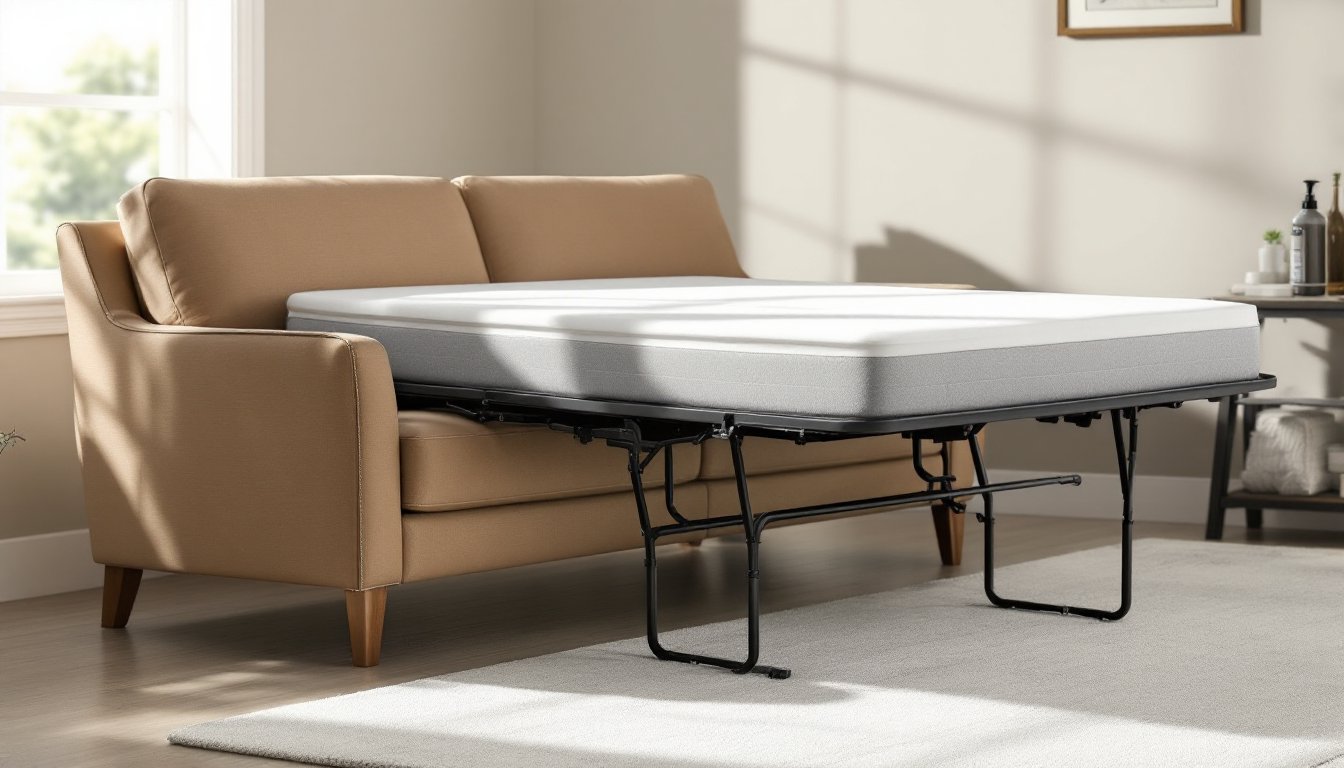
Pull the mattress open during a showroom visit if you can. Count the coil gauge (lower numbers = thicker wire = better support). For memory foam, ask about density: 5-pound-density foam is minimum. Anything below feels like it’ll compress into a pancake after two guest visits. Check whether the mattress flips out easily, some models require awkward maneuvering that’ll make you regret the choice every single time you open it.
Frame Construction and Durability
Ashley typically uses kiln-dried hardwood frames (not particleboard, which is junk long-term). Look for eight-way hand-tied springs or sinuous wire systems in the seating area. The mechanism, whether it’s a pull-out, click-clack, or sleeper sofa with a fold-down arm, matters as much as the mattress.
Pull-out models require more floor space to extend but offer a flat sleeping surface. Click-clack (or Ottoman-style) models compact nicely but may feel less sturdy for nightly use. Check the mechanism twice during your test sit. Open and close it at least five times to feel for grinding sounds or resistance. Smooth operation now means fewer headaches later.
Inspect the legs and stitching too. Solid wood legs last longer than attached metal feet, and tight, consistent stitching signals better quality control. If you see loose threads or wonky seams on a display model, assume others in that batch might have the same issue.
Popular Ashley Sofa Sleeper Collections for Your Space
Ashley’s Jarrvis collection (tan, gray, and charcoal options) sits in the sweet spot for budget-conscious buyers, around $600–$900 with a basic innerspring mattress. It’s a straightforward pull-out with clean lines that fit modern and transitional rooms without screaming “this is temporary furniture.” Reviews cite comfortable seating depth and a mechanism that doesn’t squeak.
If you need sectional sleeping space, the Ashleys Sleeper Sectional (various names, check their online catalog) runs $1,200–$1,800 depending on fabric and configuration. Sectionals are roomier for daytime lounging but harder to move through doorways. Measure your hallways and entry points before ordering, a sectional stuck on the landing is nobody’s idea of fun.
For smaller spaces, loveseats with sleepers ($500–$700) are real options. They won’t fit a full-size mattress, but twin-size pull-outs work for kids or occasional guests who don’t mind cozier quarters. Consider room dimensions: a loveseat sleeper opens to about 5 feet, so make sure that’s feasible in your guest room.
Interior design platforms like HGTV often showcase sleeper sectionals in their design segments, and you’ll find Ashley models featured regularly. Mix-and-match fabric options let you coordinate with existing decor without overhauling everything.
Maintenance and Care Tips for Long-Lasting Use
Start with a protective fabric treatment. Scotchgard or similar water-resistant spray ($15–$30 per can, apply per directions) protects against spills and dust settling into fibers. Do this right after delivery, before anyone sits on it. Reapply annually if the sofa gets heavy use.
Vacuum weekly with an upholstery attachment, this prevents dust from embedding into seams where it compounds wear. For spot cleaning, blot spills immediately with white cloth (avoid colored paper towels that dye transfer). Use mild soap and cool water for light stains. For stubborn marks, a 1:1 white vinegar and water solution works on most fabrics: test on a hidden corner first.
Rotate cushions every month if they’re removable. This distributes wear evenly so one side doesn’t flatten while others stay plump. Check the sleeper mechanism every few months, ensure slides move smoothly and there’s no debris jamming the tracks. A light vacuum of the underside helps here.
Don’t underestimate humidity control. High moisture can warp the frame and encourage mold in the mattress. Use a dehumidifier in damp basements or humid climates. If the sofa sits unused for months, crack a window occasionally or run a fan nearby. Keeping the mattress from staying damp extends its lifespan significantly.
When guests are sleeping on it, use a mattress protector and quality sheets, this cuts direct friction wear on the mattress cover. Small habits now prevent expensive repairs or replacement later. If the mechanism breaks (which occasionally happens after years of use), contact Ashley customer service about replacement parts. Many issues can be fixed by swapping a $50–$150 component rather than buying a new sofa.
Conclusion
An Ashley Furniture sofa sleeper strikes a practical balance for homeowners who need flexible seating without overspending. Focus on mattress quality, frame durability, and mechanism function rather than chasing trend-focused fabrics. Measure your space, test the opening/closing in person, and protect your investment with fabric treatment and consistent care. Done right, it’s solid furniture that earns its spot in your home for a decade or more.