Small Patio Furniture Ideas: 7 Space-Saving Solutions for Tiny Outdoor Areas
A tiny patio doesn’t mean you have to sacrifice outdoor living. Whether you’re working with a narrow balcony, a postage-stamp courtyard, or a modest deck, the right small patio furniture transforms cramped quarters into a functional retreat. Homeowners and DIY enthusiasts often assume limited square footage equals limited seating and storage, but that’s where smart furniture choices come in. This guide covers seven practical solutions that maximize comfort, function, and style without overwhelming your outdoor space, from dual-purpose pieces to vertical storage that keeps things organized and accessible.
Key Takeaways
- Measure your patio space precisely and prioritize activities you’ll actually use it for—morning coffee or small gatherings—to avoid buying oversized furniture that crowds your layout.
- Multi-functional pieces like storage ottomans, benches, and nesting tables maximize comfort and function in small patio furniture arrangements while reducing clutter.
- Vertical solutions such as wall-mounted shelves, hanging planters, and pegboards expand your storage without consuming valuable floor space in compact patios.
- Bistro sets with 24-to-30-inch tables and compact lounge chairs or sling chairs deliver comfort without overwhelming a tiny patio visually.
- Folding and stackable furniture gives you flexibility to reconfigure your small patio for solo relaxation or entertaining small groups, then store pieces away when not in use.
- Choose weather-resistant materials like resin composites, powder-coated metal, and outdoor-rated acrylic fabric to ensure small patio furniture withstands sun, moisture, and seasonal changes.
Assess Your Space and Set Priorities
Before buying a single piece of furniture, measure your patio or balcony in actual dimensions, not what it feels like. Grab a tape measure and jot down length, width, and note any permanent fixtures (railings, doors, HVAC units, or plants that stay put). Subtract about 18 inches from each side for comfortable foot traffic and to avoid that crammed feeling.
Next, ask yourself: What will you actually use this space for? Morning coffee with a book, entertaining a few friends, or quick evening lounging? Be honest. If you never host dinner parties, don’t force a table that steals half your square footage. Prioritize the activities that happen most often, then fit furniture around those needs.
Also consider weather and sunlight. Will your furniture bake in full sun, or does shade from nearby trees or structures keep things cool? This affects material durability and whether you’ll need to reposition pieces seasonally. Smaller patios heat up and cool down faster, so materials matter more than they do in larger yards.
Multi-Functional Furniture: Work Smarter, Not Harder
The golden rule for small spaces: every piece should earn its place. Multi-functional furniture does double (or triple) duty, which means fewer items crowding your patio.
Ottomans and Storage Benches
An ottoman with concealed storage is a workhorse. It functions as a footrest, extra seat, side table, and hidden storage for cushions, blankets, or gardening tools, all in one compact unit. Look for weather-resistant models with a hinged top: many come with outdoor-rated foam and fabric that shed water.
A storage bench along one wall (or tucked under a rail) serves as seating for two to three people while providing weather-protected storage below for pool toys, shoes, or maintenance supplies. Benches with back support are more comfortable for longer sitting sessions than a plain box. If you go the DIY route, build a simple bench from pressure-treated lumber (2x4s for frame and supports, 2x12s for the seat surface) with butt joints secured by galvanized screws. Add a hinged lid using exterior-grade plywood and piano hinges. Sand smooth to prevent splinters, apply exterior stain or sealant, and you’ve got a sturdy, budget-friendly storage solution in a weekend.
When choosing materials, resin and plastic composites are lightweight and resist moisture damage, but solid wood (if properly sealed) offers warmth and timeless appeal. Metal frames with cushioned tops offer industrial style and durability.
Scale Down Without Sacrificing Comfort
Small doesn’t mean uncomfortable. The key is selecting appropriately sized furniture that doesn’t dwarf your space visually while still providing actual support and relaxation.
Compact Seating and Bistro Sets
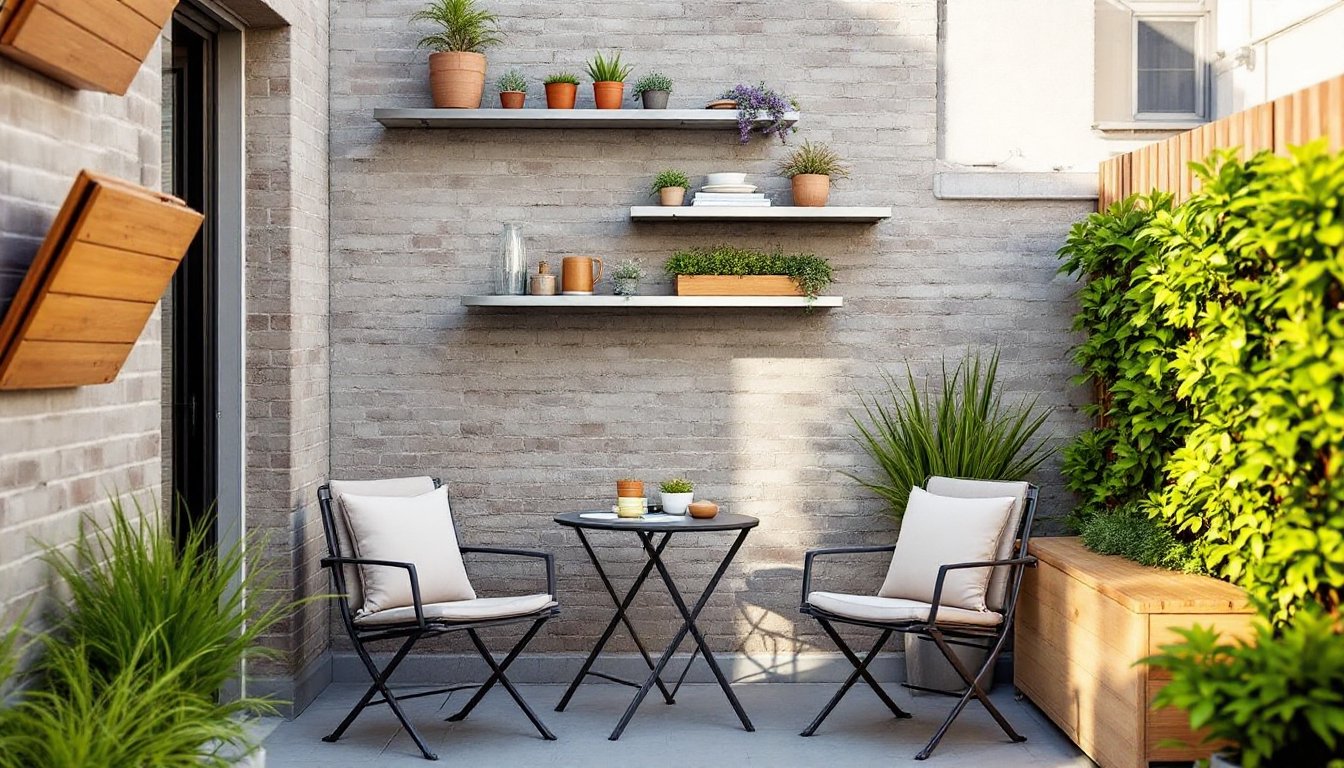
Bistro sets, a small table with two chairs, are the goldilocks of small patios. A 24-inch round or 30-inch square table takes up minimal footprint and seats two comfortably, or three in a pinch. Iron or aluminum frames keep weight down, making them easy to move. Cushions add comfort and help define the space: look for outdoor-rated fabric (like solution-dyed acrylic) that resists fading and cleans easily with a hose and mild soap.
Compact lounge chairs and sling chairs (made from fabric stretched across an aluminum frame) are lighter and thinner than traditional outdoor recliners. A papasan chair with a rattan or metal frame and a cushion brings a relaxed vibe and takes up less real estate than a full chaise. These work well as single-statement seating in very tight spots.
If you prefer bench seating, a narrower sectional or L-shaped bench with a small corner table can fit snugly against two walls. This approach gives you seating for three to four people without the footprint of separate chairs scattered around. Platforms with IKEA hacks can create custom-sized benches using affordable modular components: many DIYers modify IKEA outdoor pieces by reinforcing frames, adding storage underneath, or resizing cushions to fit exact measurements.
For comfort on any compact seating, invest in weather-resistant cushions with quality fabric. A 4-inch-thick seat cushion and 12-inch back pillow make even a small chair feel welcoming.
Vertical Solutions and Wall-Mounted Options
Vertical storage is a game-changer in small outdoor spaces. While you can’t expand outward, you can absolutely expand upward.
Wall-mounted shelving made from stainless steel, powder-coated metal, or pressure-treated wood lets you store and display potted plants, gardening supplies, and decorative items without eating into floor space. Floating shelves (usually 12 to 24 inches deep) mounted on railings or walls at waist height look airy and keep items accessible. Use galvanized shelf brackets for durability: concrete anchors rated for outdoor weight-bearing ensure secure installation. If mounting into masonry, drill pilot holes and use expanding anchors appropriate for your wall type, consult your home’s spec or ask at a hardware store if you’re unsure.
Hanging planters and trellises add greenery and visual interest while keeping the ground clear. A living wall using pockets or small containers mounted vertically creates a micro-garden that functions as both decor and privacy screening. Materials like rustproof steel, aluminum, or cedar-backed fabric pockets resist weather damage.
Pegboards and hooks (outdoor-rated versions in metal or coated materials) mount to a wall or fence and hold tools, light cushions, or baskets of supplies. Small pegboards (2-foot square or 3-foot tall) keep frequently used items within arm’s reach. Many small space living solutions rely on this strategy to maximize usable surfaces without crowding the seating area.
Folding and Stackable Furniture for Flexibility
Flexibility matters when your patio pulls double duty. Folding and stackable pieces let you reconfigure the space depending on what you’re doing, cozy for solo relaxation one day, open for a small gathering the next.
Folding chairs (metal frames with sling fabric or wood slats) collapse to a fraction of their sitting width, tuck behind a door or on a shelf, and pull out when you need extra seating. Aluminum frames are lighter than steel and resist rust: look for reinforced joints and quality stitching in the fabric. Most folding chairs cost $30–$80 depending on materials and brand, affordable enough to buy a few pairs without guilt.
Stackable stools and small tables save enormous space. Nesting tables (a set of three in graduating sizes) stack neatly in a corner when not in use and spread out to create surfaces for drinks, snacks, or decor. Stacking stools with seats or cushions serve as extra seating, footrests, or low plant stands: they store in a compact bundle.
Folding side tables and console tables (designed to fit against a wall or rail) expand your surface area for meals or projects without the footprint of a permanent dining setup. Models on hinged legs fold flat and mount to a wall, deploying only when needed. Heavy-duty stainless steel hardware and corrosion-resistant materials ensure they’ll handle outdoor conditions.
When shopping for folding or stackable pieces, test stability in-store if possible. Check that hinges and joints don’t wobble, and verify weight ratings match your needs. Outdoor living space designs often feature collapsible furniture as a practical way to maximize flexibility in small courtyards and urban gardens, letting homeowners switch between intimate entertaining and open lounging zones.