Modern Contemporary Living Room Furniture: Transform Your Space in 2026
Modern contemporary style has evolved into one of the most practical and versatile approaches to home design. Unlike trendy aesthetics that fade in a few seasons, contemporary furniture emphasizes clean lines, purposeful design, and functionality, qualities that make a living room both beautiful and livable. Whether you’re starting fresh or refreshing your current setup, understanding what makes modern contemporary design work helps you make confident purchasing decisions. This guide walks you through selecting and arranging furniture that balances sleek aesthetics with real comfort, proving that style and practicality don’t have to compete.
Key Takeaways
- Modern contemporary living room furniture prioritizes clean lines, functional design, and open space over ornate details, creating rooms that feel both stylish and livable.
- A contemporary sofa with low profile and quality construction serves as the essential anchor piece, paired with a proportional low coffee table and strategic storage solutions like media consoles.
- Neutral color palettes (whites, grays, taupes) form the foundation, with one or two accent colors introduced through jewel tones or warm earthy shades to maintain visual interest without clutter.
- Layering natural materials like wood, metal, glass, and concrete with substantial upholstery and textural elements creates comfortable, sophisticated spaces without compromising minimalist aesthetics.
- Thoughtful space planning with clear sight lines, consistent furniture heights, and floating arrangements makes modern contemporary living rooms feel larger and more intentionally curated.
- Budget-conscious updates are achievable by retaining quality existing pieces, investing annually in one anchor item, and incorporating low-cost improvements like fresh paint, artwork, and hardware swaps.
Understanding Modern Contemporary Style
Key Characteristics of Modern Contemporary Design
Modern contemporary design is often confused with “modern” (a specific mid-20th-century movement), but contemporary actually means “of the present time.” Contemporary style borrows from modernism, minimalism, geometric forms, and functional design, while incorporating current trends and materials. The result feels fresh and current without becoming dated.
A contemporary living room prioritizes open space and negative space. Clutter is the enemy: every piece serves a purpose. Furniture sits low to the ground, emphasizing horizontal lines that make rooms feel more expansive. Wood, metal, glass, and concrete appear regularly, often left in their natural state rather than heavily ornamented. Colors tend toward neutral base tones with strategic accent colors, usually in jewel tones or muted earth shades.
The key difference between contemporary and minimalist: contemporary allows more texture, layering, and visual interest. You’re not aiming for a stark showroom, you’re creating a space that breathes while still feeling curated and intentional. Comfort is non-negotiable in modern contemporary living rooms: a sofa might have clean lines, but it needs to actually support you during a movie night.
Essential Furniture Pieces for a Modern Contemporary Living Room
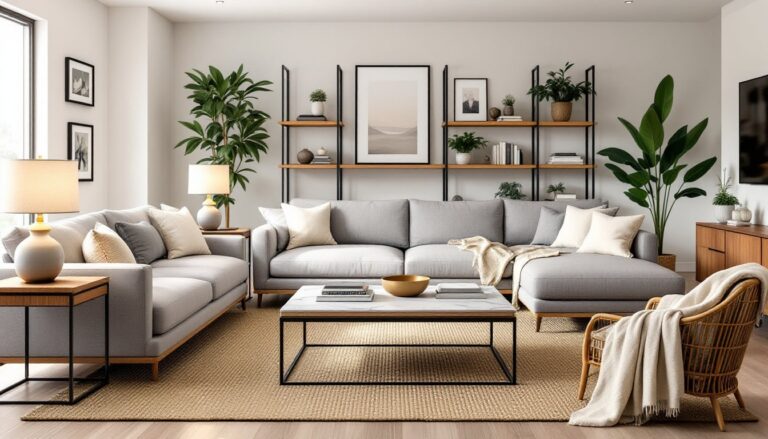
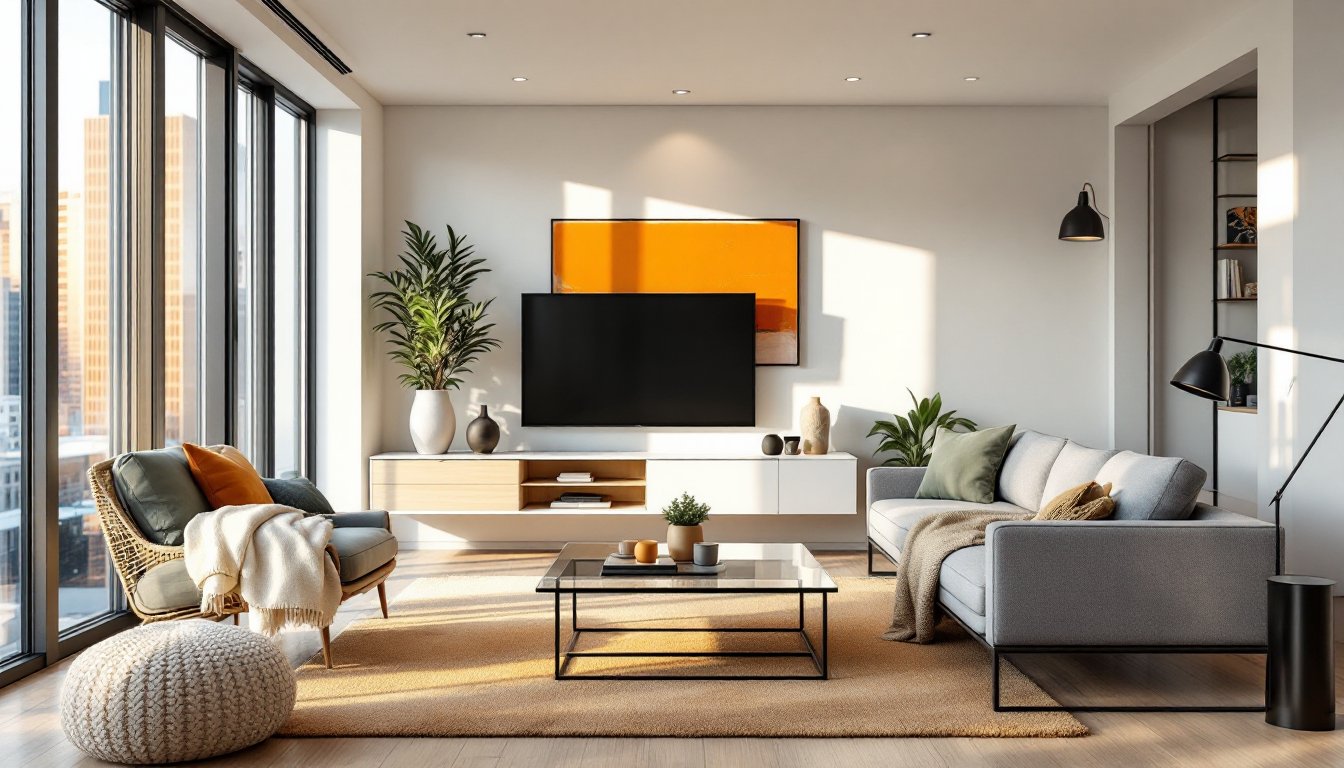
Start with a sectional or sofa as your anchor. Contemporary sofas feature low profiles, often with metal legs or wooden feet that expose the floor beneath. Avoid ornate details: instead, look for clean arm lines and minimal cushion quilting. An L-shaped sectional works well for open-concept spaces and provides flexibility for different seating arrangements. Aim for quality construction, hardwood frame, high-density foam, and tight upholstery, rather than a trendy fabric you’ll tire of quickly.
A low coffee table is nearly essential in contemporary design. Glass tops with metal frames, solid wood slabs on metal bases, or concrete surfaces all work. Keep the height proportional to your sofa: the tabletop should sit roughly level with the sofa cushion or slightly lower. Avoid thick, chunky tables, contemporary pieces feel lighter, even when sturdy.
Storage is disguised in contemporary living rooms. A media console with clean lines and integrated shelving solves the TV mounting problem while providing hidden storage for remotes, gaming consoles, and cables. Look for wall-mounted options or floating designs to keep visual weight low. Add a sideboard or credenza if you need additional storage without committing to a full bookshelf. Tall, floor-to-ceiling shelving works too, but keep shelves uncluttered with intentional spacing between objects.
For seating beyond the sofa, choose one statement piece. An accent chair with a geometric frame or unusual upholstery adds personality without overwhelming the room. Alternatively, a modular ottoman or poufs provide flexible seating that can be rearranged or tucked away. Modern design on platforms like contemporary furniture showcases demonstrates how statement seating anchors a space while maintaining cohesion.
Color Palettes and Materials That Define the Look
The contemporary color palette starts with neutrals: whites, grays, blacks, and warm tones like taupe and beige form the foundation. These aren’t boring, they’re intentional, allowing furniture form and texture to take center stage. From this neutral base, add one or two accent colors through pillows, throws, or artwork. Jewel tones like emerald, sapphire, and deep burgundy feel contemporary without clashing with modern minimalism. Alternatively, warm accents in mustard, rust, or warm terracotta complement neutral furniture beautifully.
Materials matter immensely. Genuine wood (walnut, oak, or ash) provides warmth and durability. Metal, steel, aluminum, and powder-coated finishes, adds an industrial edge. Glass and concrete introduce cool, architectural elements. The best contemporary rooms layer these materials: a concrete accent wall, wooden furniture legs, metal frame chairs, and glass tabletops all coexist without feeling chaotic because the color palette ties everything together.
Upholstery should feel substantial. Linen, microfiber, and performance fabrics work well for contemporary spaces. Avoid patterns in favor of solids: if you want pattern, limit it to textural pieces like a chunky knit throw or woven area rug. Design inspiration resources often showcase how texture variations in neutral tones create visual interest without departing from the contemporary aesthetic. Leather, real or high-quality faux, adds sophistication and ages beautifully in modern spaces.
Layout and Space Planning Tips
Begin layout planning by identifying your room’s focal point. Is it the window, a fireplace, or the wall where the TV mounts? In contemporary design, the seating arrangement should feel intentional around this focal point, not random. A sofa facing the main focal point is standard, but consider floating arrangements, positioning furniture away from walls, to define conversation areas in open-concept homes and create a sense of coziness.
Maintain clear sight lines. Contemporary living rooms feel larger when you can see across the space without obstruction. Avoid clustering furniture in corners or pushing everything against walls. Leave at least 18 inches between pieces to allow movement and prevent the room from feeling cramped. The coffee table placement is critical: it should sit 12 to 18 inches from the sofa, close enough for convenience but not crowding the seating area.
Vertical space matters. Tall bookcases, wall-mounted shelving, and architectural elements draw the eye upward, making ceilings feel higher. In contrast, low-profile furniture creates horizontal flow. If you have multiple seating areas, maintain consistent furniture heights so one zone doesn’t visually overwhelm another. A rug helps ground the arrangement: choose one large enough that at least the front legs of major furniture pieces sit on it. This visually connects the seating area and prevents the room from feeling fragmented.
Blending Comfort With Minimalist Aesthetics
The tension between minimalism and comfort is real, but they’re not opposites. Contemporary design solves this by prioritizing quality over quantity. A beautifully upholstered sectional with deep cushions satisfies both aesthetics and comfort. The key is choosing one statement seating piece instead of filling the room with multiple chair and ottoman combinations.
Layering textures creates comfort without clutter. A chunky knit throw over the sofa arm, a linen pillow with a subtle pattern, and a sheepskin or faux fur accent add tactile warmth while maintaining visual simplicity. Keep textiles intentional: two to three throw pillows per seating surface is standard, not a dozen. Design trends consistently show that contemporary comfort comes from materials that feel good, natural fibers, quality upholstery, and practical layers, rather than from excess.
Lighting affects both comfort and aesthetics dramatically. Contemporary spaces often feature a mix of sources: recessed overhead lights for general illumination, a statement floor lamp for task lighting and visual interest, and perhaps table lamps on a console or side table. Warm white bulbs (2700K to 3000K) feel more inviting than cool white, and dimmer switches allow you to adjust ambiance without changing fixtures. This flexibility lets you customize comfort for different activities, movie watching versus entertaining, without abandoning the sleek look.
Budget-Friendly Ways to Update Your Living Room
You don’t need to replace everything at once. Start by keeping your best existing pieces, a solid sofa, sturdy coffee table, or quality shelving, and build around them. If these pieces align with contemporary values (clean lines, neutral colors, good condition), they’ll work. Swap out outdated accent pieces like heavily patterned throw pillows, ornate side tables, or busy wall décor.
Prioritize one investment piece annually. A high-quality sectional or sofa lasts 10-15 years and anchors the room. Invest here, then gradually add supporting pieces like a console table, area rug, or bookshelf as budget allows. Budget-friendly retailers offer surprisingly solid contemporary options in mid-range price points: focus on frame quality and upholstery durability rather than brand names.
Secondhand shopping works well for contemporary furniture because the style doesn’t depend on trend-specific details. Estate sales, Facebook Marketplace, and local furniture consignment shops often have solid wood pieces that simply need cleaning or refinishing. A worn wooden credenza gets new life with wood conditioner or a fresh stain. Be selective, buy only pieces that need minimal work and align with your color palette.
Make existing walls work harder. A fresh coat of paint (warm white, soft gray, or matte black) instantly modernizes a space. Add large-scale artwork, abstract prints, photography, or geometric pieces, without overfilling walls. Lean artwork against shelving rather than hanging it to maintain that casual, contemporary feel. Swap hardware on existing drawers or cabinets for modern metal pulls. These small touches cost little but shift the entire aesthetic significantly.